
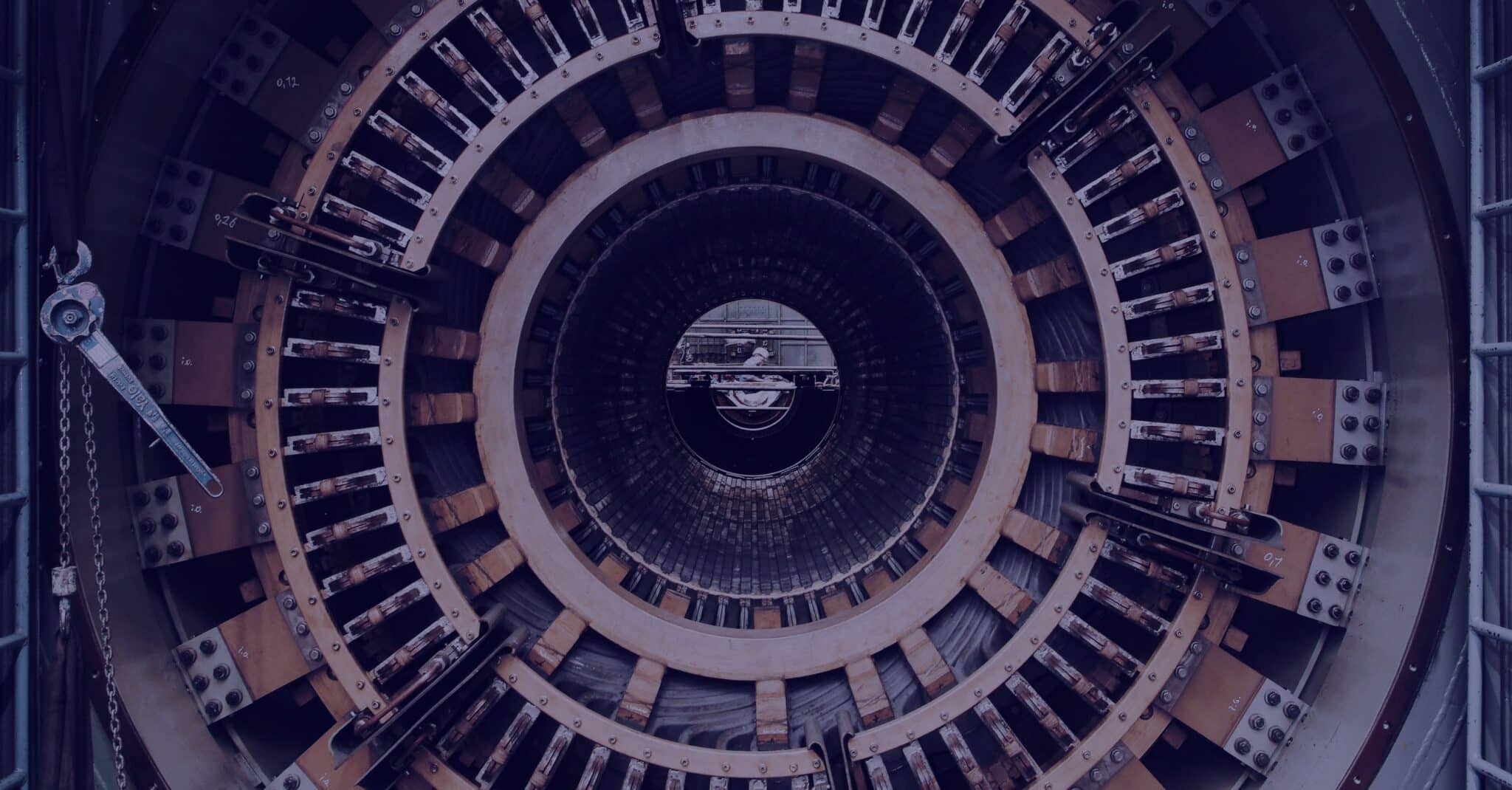
The generator converts rotational kinetic energy from the turbine into electrical energy through electromagnetic induction. High-pressure steam spins the turbine blades, which rotate the generator connected to the low-pressure end of the turbine.
Cooling Mechanism
The generator uses both stator cooling water and pressurized hydrogen gas to manage heat. Hydrogen is sealed inside the generator at pressure to cool both the rotor and stator, while cooling water flows through hollow stator bars to carry away heat directly.
Hydrogen is chosen for its low density, high specific heat, and thermal conductivity — with a heat transfer coefficient three to four times higher than air. Its lower density also reduces air resistance loss, enabling effective ventilation at narrow intervals.
The Early Warning
91 hours of lead time
On the evening of January 20, HanPHI began tracking a gradual decline in stator end winding cooling water flow during otherwise normal plant operation. What appeared subtle at first quickly became significant.
Cooling water flow begins to drop
Stator cooling water flow starts declining from normal operating range. HanPHI health index registers the deviation and begins tracking with the index at 92.3%.
Early warning triggered when the index falls to 71.1%
Flow continues dropping continuously. HanPHI generates an early warning. Actual flow: 234.8 l/min vs. expected 256.3 l/min, well below the trained normal range of 255.7–265.3 l/min.
Operations manager alerted, initially dismissed as sensor fault
The plant received the HanPHI notification but initially treated it as a measurement failure. Continued observation, however, confirmed the reading was real. A leak had developed in the generator cooling system.
Crack found in generator header
An engineer discovered a crack in the generator header caused by vibration. Cooling water was leaking through this small fracture and hydrogen gas consumption surged from 5 bottles per day to more than 20 bottles (approximately 100 cubic meters per day).
Plant derates from 870 MW to 800 MW
The severity of the issue was escalated to the technical director. The plant reduced output as an emergency precaution while the maintenance plan was prepared.
A safe shutdown occurs for required maintenance
The plant was safely shut down per the emergency maintenance plan. Corrective action was taken to repair the cracked generator header and restore full operation.
How HanPHI’s Index Compares to Standard DCS Alarms
The table below highlights how HanPHI’s trained normal range and early warning value provided significantly earlier detection than the plant’s existing DCS low alarm, giving operators crucial lead time to investigate and respond.
| Tag | Trained Normal Min | Trained Normal Max | HanPHI Early Warning | DCS Low Alarm |
| Generator stator cooling water outlet flow | 255.7 l/min | 265.3 l/min | 235 l/min | 210 l/min |
| Generator H₂ pressure | 0.50 MPa | 0.53 MPa | 0.54 MPa | 0.48 MPa |
For this specific operating environment, HanPHI’s early warning for cooling water flow (235 l/min) is above the DCS low alarm (210 l/min), providing a wider detection window and more time for investigation before a conventional alarm would trigger. Through HanPHI, the site was able to avoid a catastrophic generator failure.
Actual Flow
234.8
l/min
Expected Flow (Predicted)
256.3
l/min
H₂ Usage Increase
4×
5 → 20+ bottles/day
Output Derating
−70 MW
870 → 800 MW
HanAra Success Stories

A Hidden Crack in the Generator Header Caught Before Catastrophe
The generator converts rotational kinetic energy from the turbine into electrical energy through electromagnetic induction. High-pressure steam spins the turbine blades, which rotate the generator connected to the low-pressure end of the turbine. Cooling [...]

Taking Control of Battery Energy Storage: How HanPrism Delivered Multi-Tenant BESS Monitoring
Battery Energy Storage Systems (BESS) are playing an increasingly role in the modern energy landscape. By storing excess energy during low-demand periods and releasing it during peak demand, BESS installations help balance demand, reduce [...]

How Real-Time Monitoring Enhanced Fuel Cell Operations
The Fuel Cell Challenge A large-scale energy facility operated six fuel cell units to convert hydrogen and oxygen directly into electricity through chemical reactions. These fuel cells generate power continuously as long as fuel [...]